Environmental · Observed & Reported April 6, 2026
Wetland Disturbance on Eastover Road
Unpermitted land clearing, mass tree removal, and construction of an 8-foot log wall extending into DEC-mapped wetlands — observed by drone in April 2026, documented with before-and-after aerials dating to the property's acquisition in October 2022.
Discovery
Found While Documenting the Marsh
On April 6, 2026, Ragnar was flying a drone over Great Meadow Creek to capture aerial photographs for his conservation proposal — the same proposal submitted to the Board of Trustees in January 2026. While doing so, he observed significant unpermitted land disturbance on a private parcel immediately adjacent to Village-owned wetlands.
The disturbance was not subtle. Drone footage and ground-level photographs showed hundreds of mature trees clear-cut, an 8-foot wall constructed from the felled timber pushed into the wetland edge, and an enormous quantity of fill material deposited behind it. A 6'6" person standing at the site was photographed for scale.
Ragnar reported the observation to Mayor Walter Roll by email the same morning, with photographs and a formal explanation of the regulatory implications.
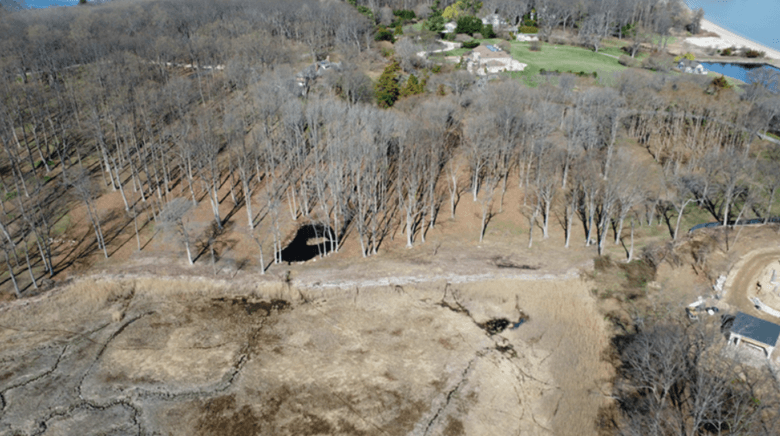
Drone photograph, April 6, 2026 — cleared site with log wall visible pushing into wetland edge
Aerial Comparison
The Change Since Acquisition
The property was acquired on October 14, 2022. Three aerial snapshots — at acquisition, seven months later, and in March 2025 — document the scale and progression of the disturbance over less than three years.
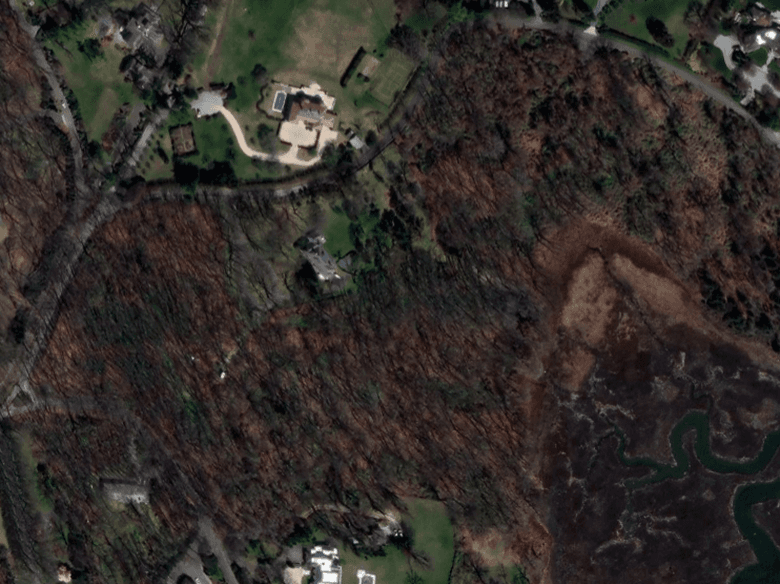
Before — Property acquired Oct 14, 2022
October 2022
Mature tree canopy intact across the full parcel. No visible clearing or earthwork. Wetland edge undisturbed.
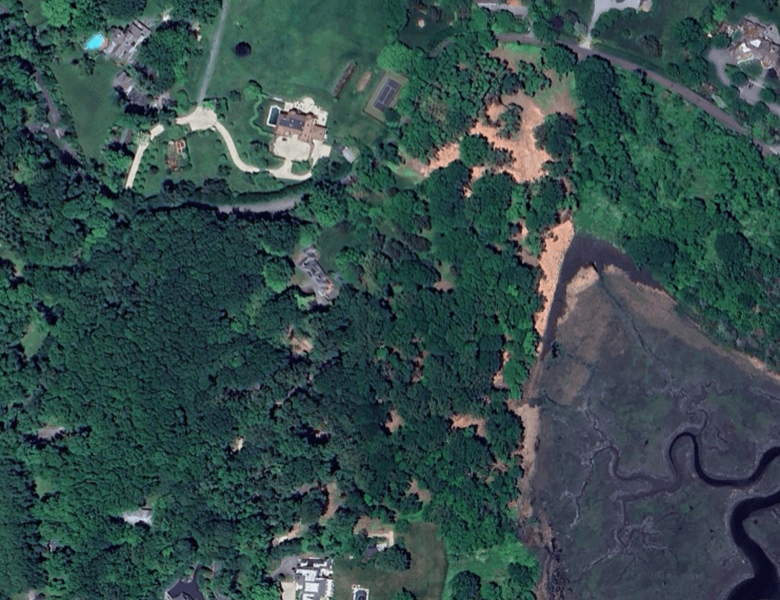
Clearing underway
May 2023
Large-scale tree removal visible from aerial. Bare earth exposed across significant portions of the property adjacent to Village-owned wetlands.
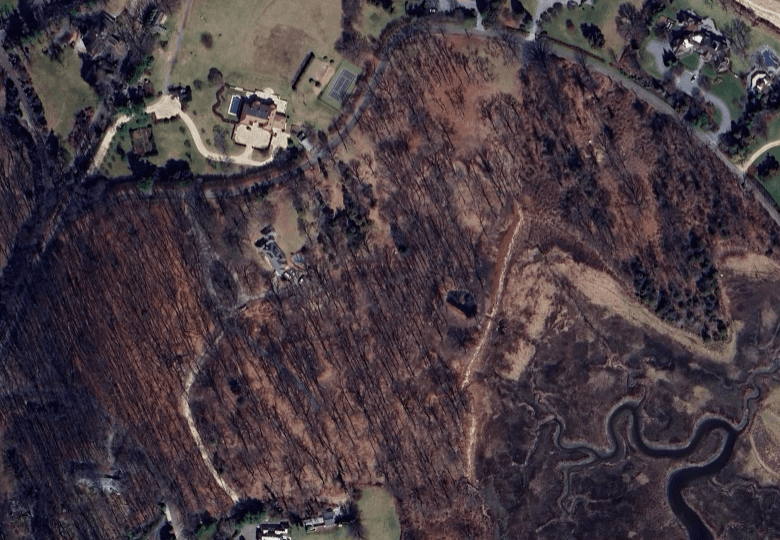
After — current condition
March 2025
Hundreds of mature trees clear-cut. An 8-foot log wall constructed from felled timber extends 80+ feet into the DEC-mapped wetland. Massive quantity of backfill deposited behind the wall.
Aerial imagery sourced from public satellite records and drone photography. Dates correspond to documented observation timestamps.
What Was Constructed
An 8-Foot Log Wall, 80+ Feet Into the Wetland
The felled trees were not removed from the site. They were used as raw material to construct a makeshift retaining wall — approximately 8 feet tall, extending more than 80 linear feet — pushed into the wetland boundary. Behind the wall, a substantial quantity of backfill was deposited, effectively filling and displacing wetland area.
Ground-Level & Aerial Photographs — April 6, 2026
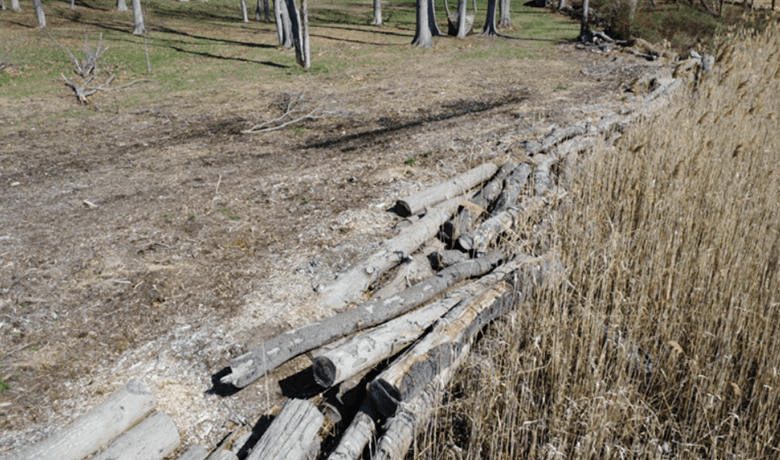
Log wall — full view
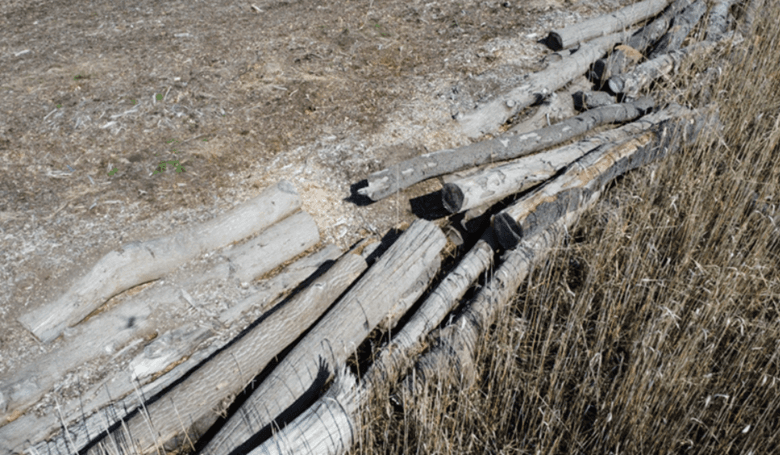
Log wall — detail
Aerial — cleared site
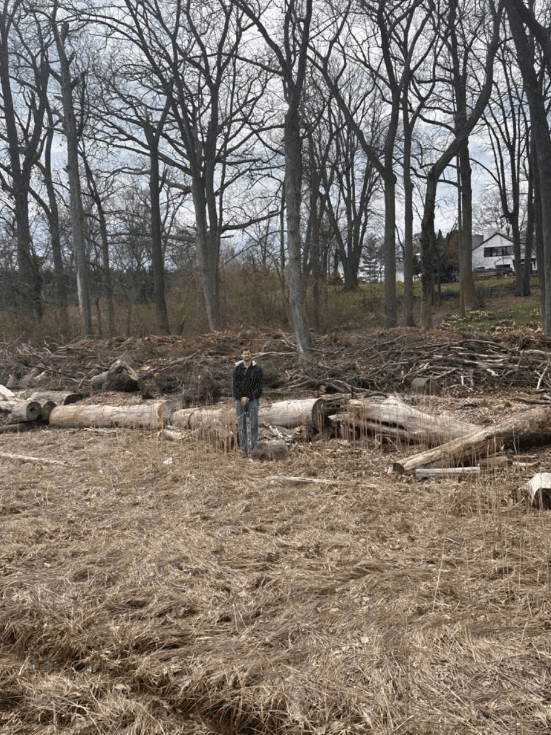
8-ft scale reference
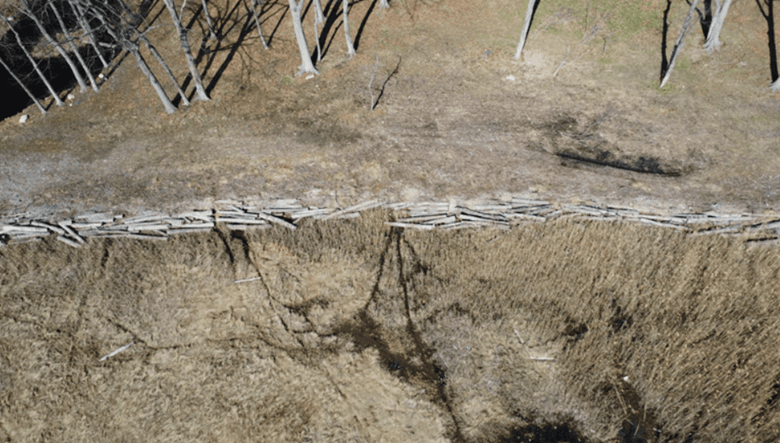
Aerial — wall and fill
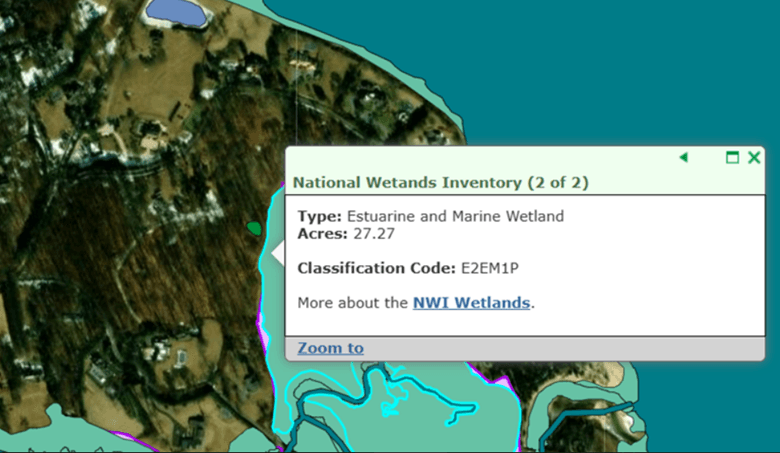
NWI wetland mapping
The wall appears to be pushing toward — and potentially into — Village-owned wetland parcel SBL 28 B 209, the same 28-acre marsh that is the subject of Ragnar's January 2026 conservation proposal.
Regulatory Context
Why This Matters Under State Law
New York DEC jurisdiction extends 300 feet upland from the edge of any mapped regulated wetland — unless bounded by a roadway, a pre-existing manmade structure greater than 100 feet in length, or an elevation of ten feet or higher. None of those limiting conditions apply here. The disturbed area meets all four criteria placing it squarely within DEC jurisdiction:
The area is within a DEC-mapped wetland (E2EM1P classification, 27.27 acres)
Observable wetland vegetation is present throughout the disturbed zone
There is no historical roadway or pre-existing bulkhead that would limit DEC jurisdiction
The area is inundated with water at high tide, indicating an elevation of approximately 5–6 feet — well within DEC jurisdiction
National Wetlands Inventory — E2EM1P (Estuarine and Marine Wetland), 27.27 acres
Any fill, grading, or construction within DEC jurisdiction requires a DEC permit. Activity within the mapped wetland boundary itself is subject to more stringent regulation. No permits for this work have been identified in the public record.
Context
Who Knew, and When
Eastover Road, which runs along the northern edge of the property, is routinely patrolled by Village police. The scale of the clearing — hundreds of trees, construction equipment, an 8-foot wall — would have been visible from the road over an extended period.
ZBA Chairman John McCaskill lives directly across Eastover Road from the disturbed parcel. The property was subdivided after acquisition — a process that would have involved ZBA review and property tours. Ragnar was not notified of the subdivision, despite having understood the buyer's intent to be conservation.
Chairman McCaskill had publicly emphasized due process and equal code enforcement at Ragnar's own ZBA hearings — the same hearings where Ragnar's routine property improvements were scrutinized closely and subjected to stop work orders. Ragnar's letter to Mayor Roll noted this directly.
"John also mentioned at my hearing how important due process and Village codes are, so I'm sure he would be equally eager to address what appear to be blatant breaches of both Village and environmental law."
— Ragnar Oelsner, letter to Mayor Walter Roll, April 6, 2026
The Notification
Reported to the Mayor the Same Morning
From: Ragnar Oelsner <ragnar@occidentalpm.com>
To: Mayor Walter Roll <mayor@centreisland.gov>
Subject: Notice of Observed Site Disturbance and Potential Jurisdictional Implications
The email included drone photographs of the disturbance, before-and-after aerial comparisons dated to acquisition, ground-level photographs with a human scale reference, DEC wetland mapping screenshots, and a plain-English explanation of why the site falls within DEC jurisdiction.
As of April 2026, no documented enforcement action by the Village has been identified in response to this notification — despite the Village having issued stop work orders and threatened $500/day fines against Ragnar for routine drainage maintenance on his own property during the same period.