Our Island
Centre Island, New York
605 acres. Four miles of coastline. Four centuries of history.
The Land
A Peninsula Between Three Waters
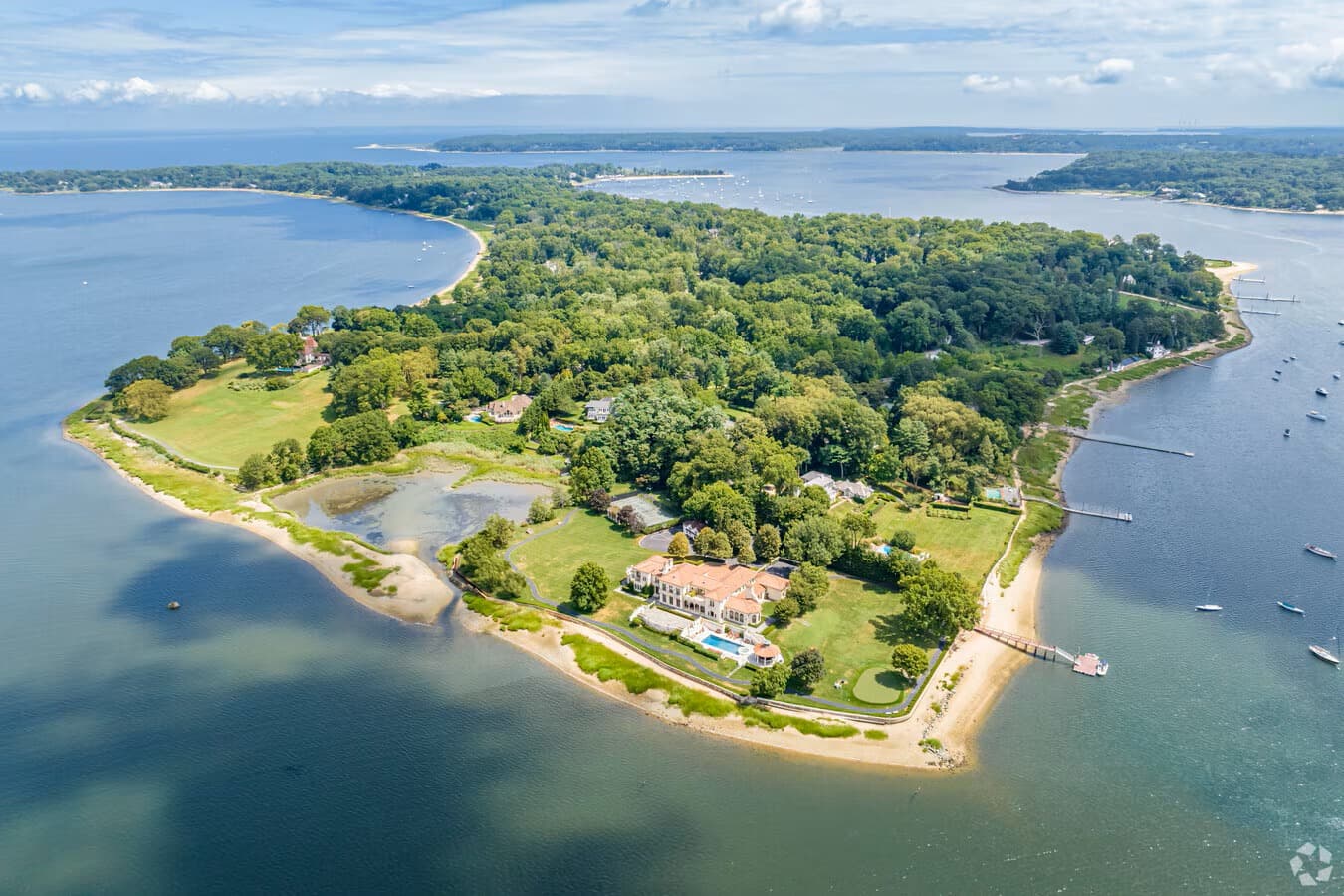
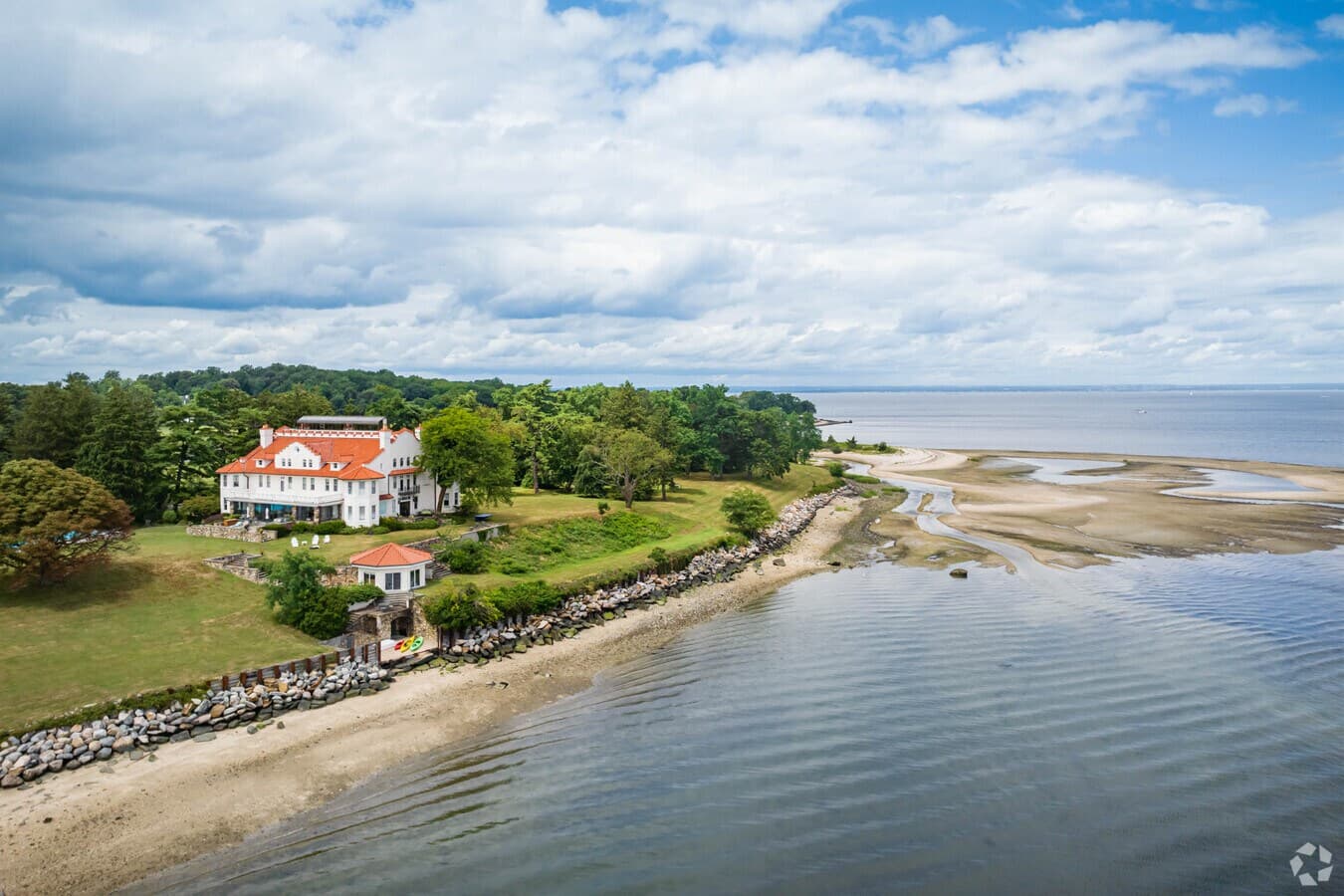
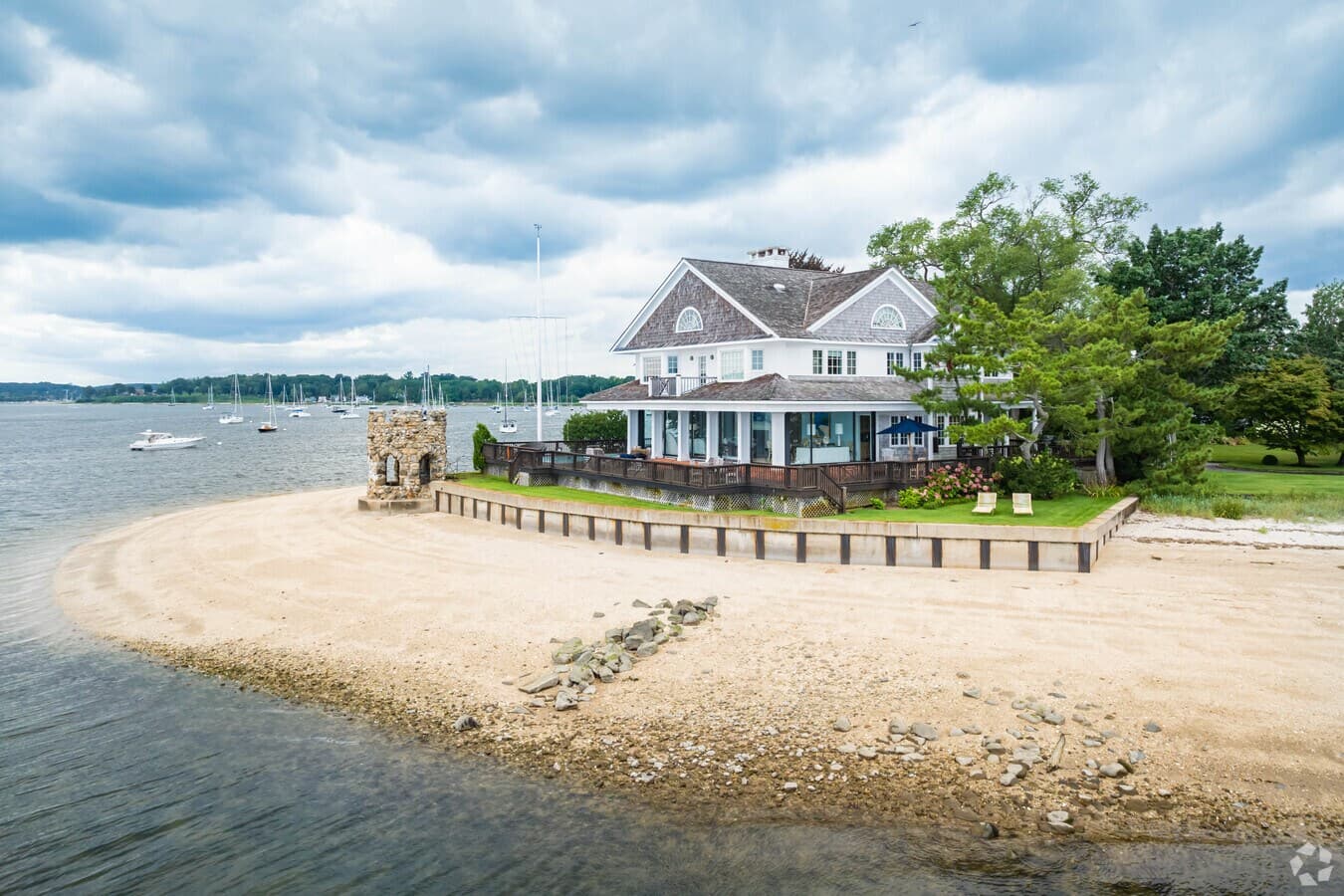
Centre Island is a 605-acre peninsula scything into the waters where Cold Spring Harbor, Oyster Bay Harbor, and Long Island Sound meet. More than four miles of coastline make it one of Long Island's most distinctive places — and one of its most sheltered.
The earliest Europeans called it "Hog Island," a name that persisted on maps well into the nineteenth century. Around 1840 the residents simply started calling it what it felt like: the island at the centre of things. The new name stuck.
First Peoples & First Claims
Three Thousand Years Before the Village
The Matinecock people had been hunting, fishing, and gathering on this peninsula for thousands of years before any European arrived. When the Dutch and English came in the early seventeenth century, they negotiated — however imperfectly by modern standards — rather than simply seizing.
In 1635, Charles I of England granted all of Long Island to William, Earl of Sterling, who in June 1639 sold two necks of land at Oyster Bay for ten shillings — one of them the peninsula now called Centre Island. In 1650, Matinecock sachems sold the same land to a group of Dutch merchants, creating conflicting title claims that the Town of Oyster Bay resolved in 1666 by purchasing the island outright.
The island's earliest English settler was Joseph Ludlam, who bought a portion from the town around 1680, farmed it, raised a family, and died there in 1698. He is buried in the family plot on the island. Other early landholders — the Underhills, Crabbes, Wrights, Weekses, and Townsends — shaped the island's first century through a web of purchases and inheritances.
The Smith Era
Squire Smith and the Revolution
In April 1743, Thomas Smith — son of a Herricks family, soon to become one of the wealthiest men on Long Island — purchased roughly 200 acres on the island's southern end. He moved his family there in 1753, farming and running a shipping operation from the waterfront.
The Revolution found Smith on the wrong side of history by the colonists' reckoning. He held a Crown appointment as King's Justice for Oyster Bay and sheltered British sympathies throughout the war. On March 3, 1778, seven patriots led by William Scudder crossed to the island on orders from General Washington — specifically to capture Squire Smith. The British intercepted them first. Scudder later confessed he'd gone to Hog Island for Smith, but Smith had already fled.
The remarkable coda: Smith's standing in the community was sufficient that after the Revolution he simply returned and resumed his position as Justice of the Peace. The community forgave, or at least accommodated, what the war had divided.
Smith family descendants lived on the southern end of the island at their homestead, "Upper Orchard," until it burned in 1897. A new house was built on the site. The family remained on the island until the 1990s — more than two and a half centuries in one place.
The Village Takes Shape
Yachtsmen, Brickmakers, and Incorporation
Through the eighteenth and nineteenth centuries, the island's economy ran on farming and a commercial brick works on the southwest point — quarry, kiln, warehouses, and docks. It was an industrial operation, and a significant one.
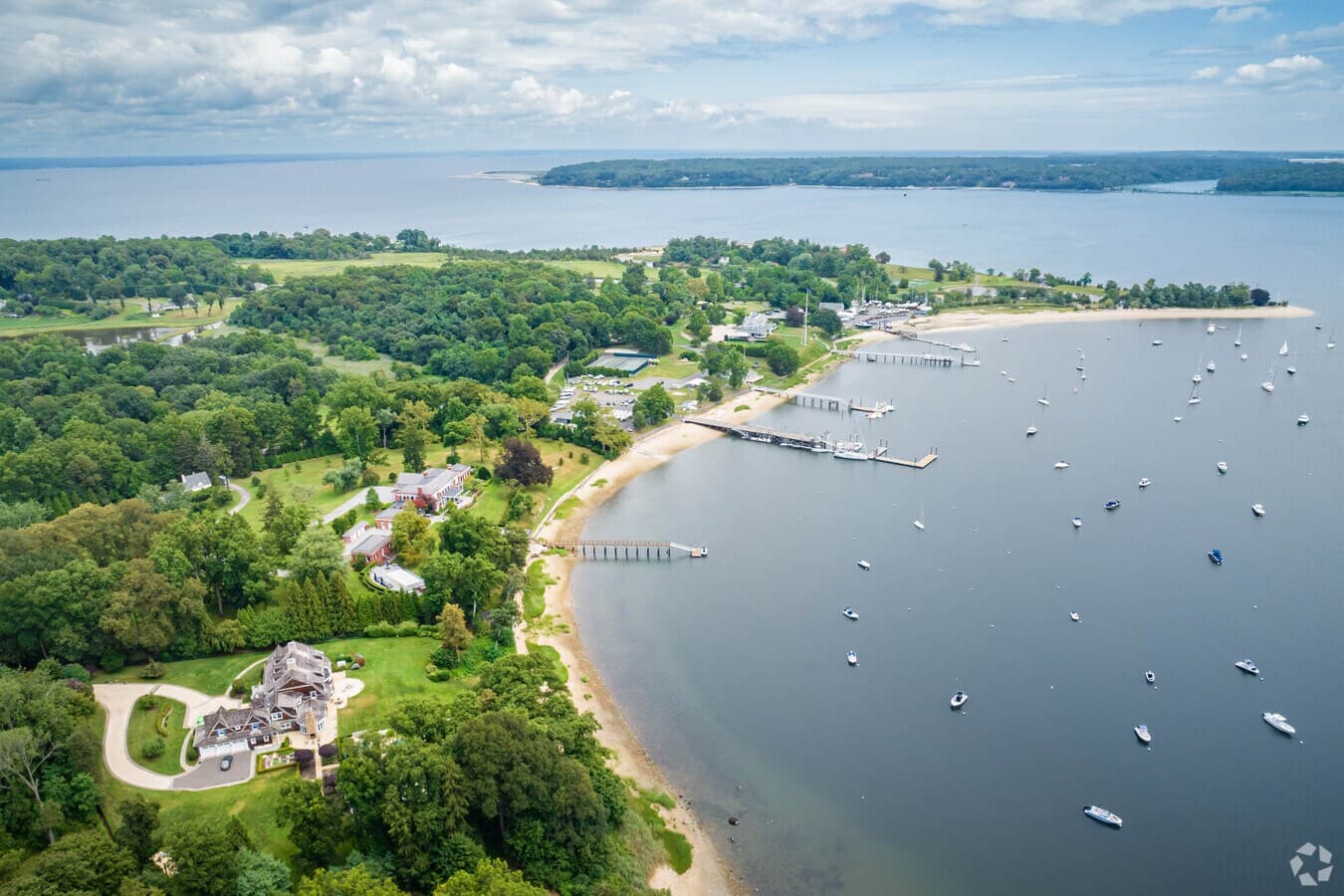
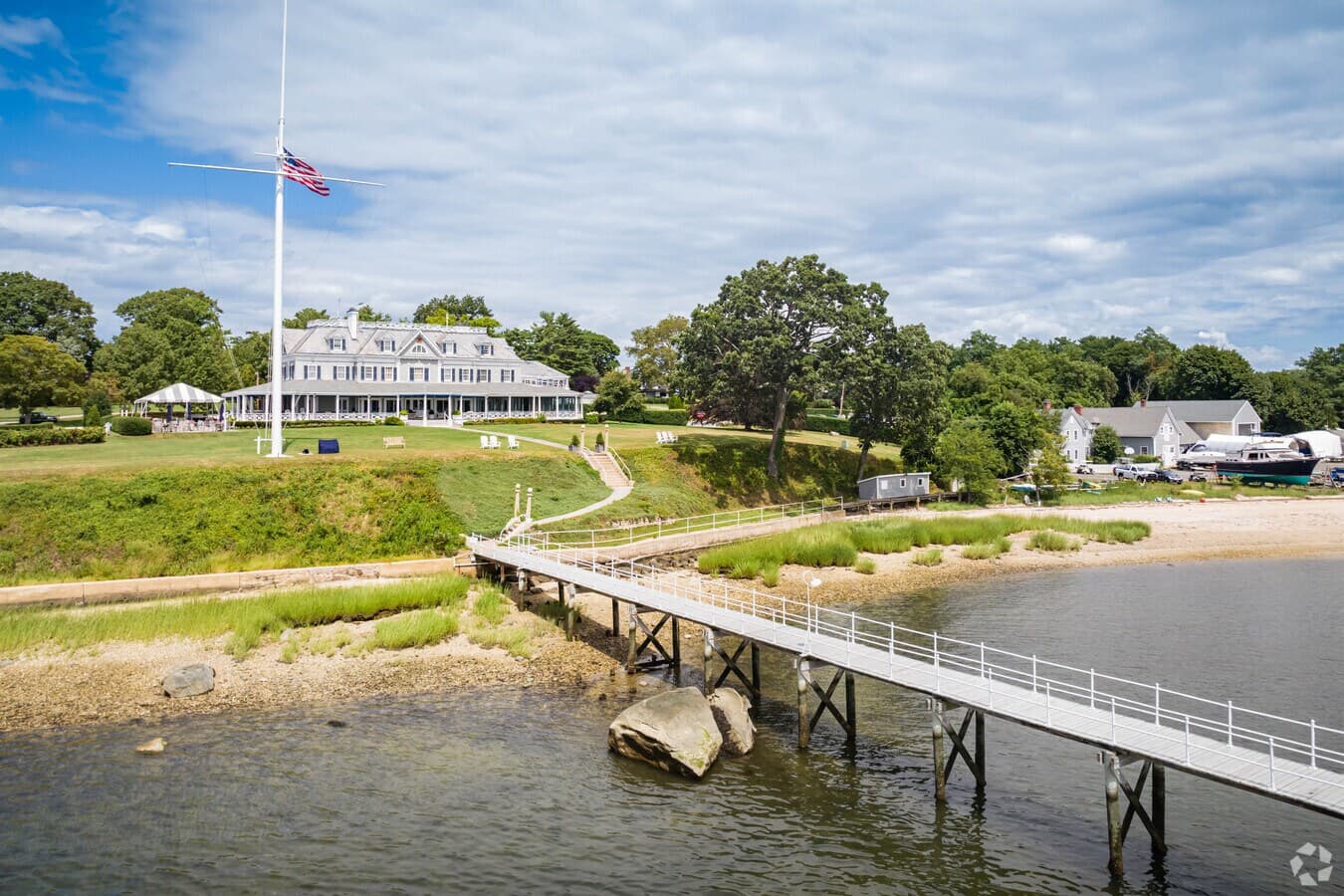
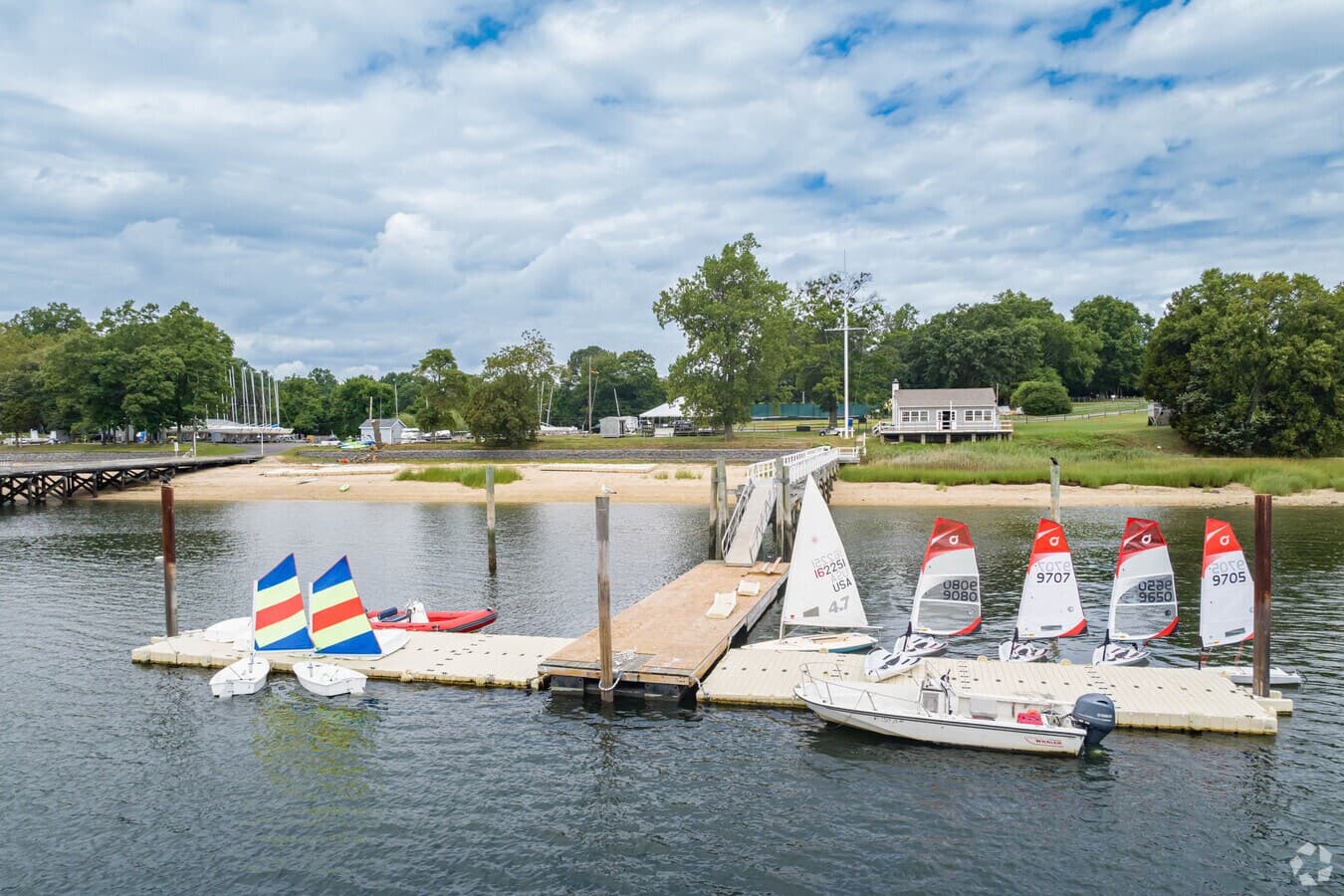
In 1871, the Seawanhaka Corinthian Yacht Club built a modest clubhouse on the island's sheltered eastern harbor. As the membership grew, a grander building replaced it in 1891 — the structure that stands today. The club acquired about 80 acres, held in trust through the Centre Island Improvement Association, which it eventually sold to members who built large summer estates.
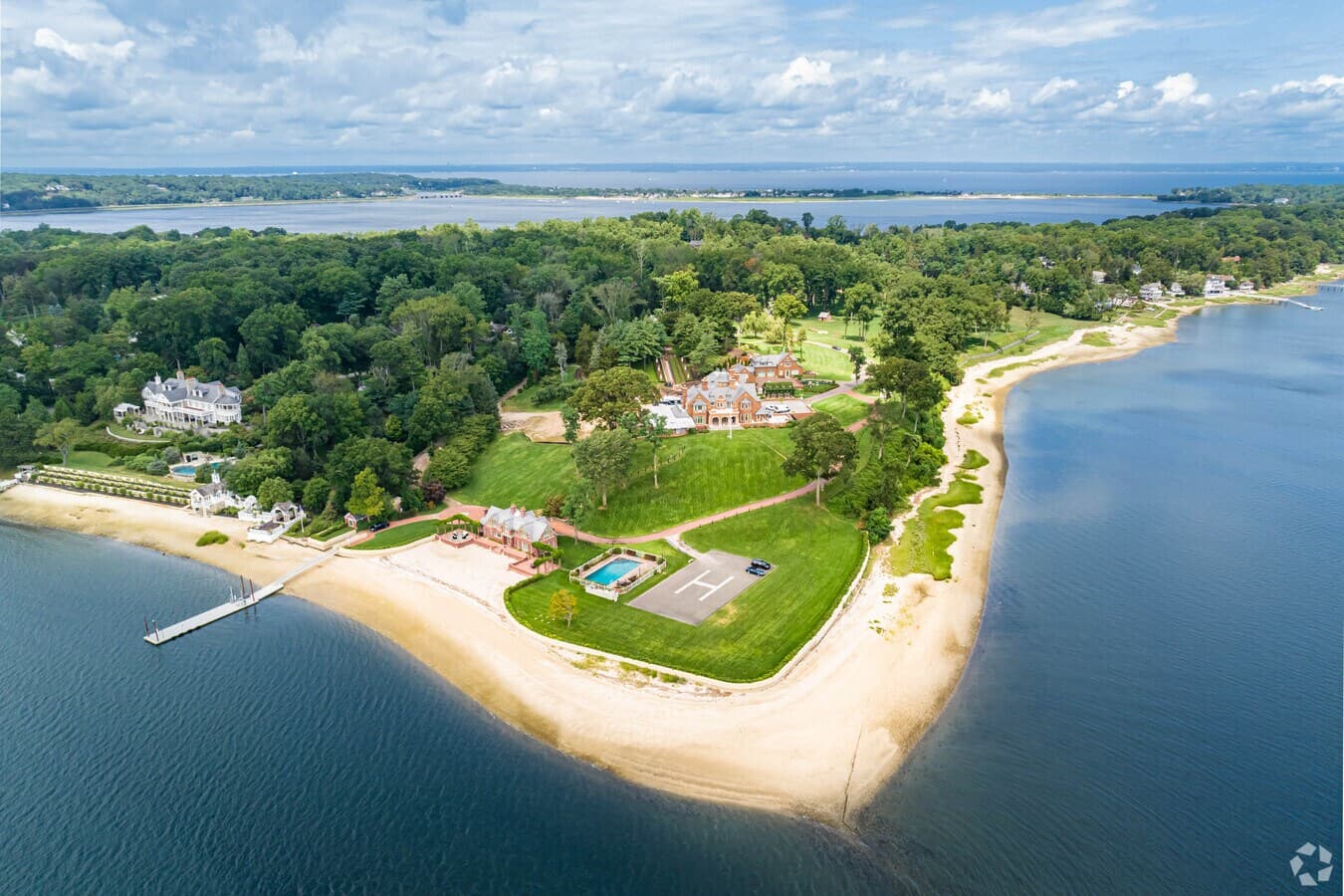
The yacht club's arrival signaled the island's transition. Wealthy yachtsmen moved in; the brick works became uneconomic and closed in the early 1900s. The Smith family's southern 200 acres began to be sold off. An island of farmers and brickmakers became an island of estates.
Population pressure from post-WWI development schemes — small beach lots, summer cabanas — pushed residents to protect the island's character through incorporation. The process began in 1917 and was completed in 1926: the Village of Centre Island.
Through the 1930s, roughly 30 households called it home year-round. Their domestic staff outnumbered them by about ten to one. After World War II, several large estates were razed and subdivided into parcels of three to fifteen acres. The postwar decades, and especially the 1970s through 1990s, brought more than 80 new houses. The village as it exists today was largely built in that era.
Centre Island Today
A Rural Enclave Worth Protecting
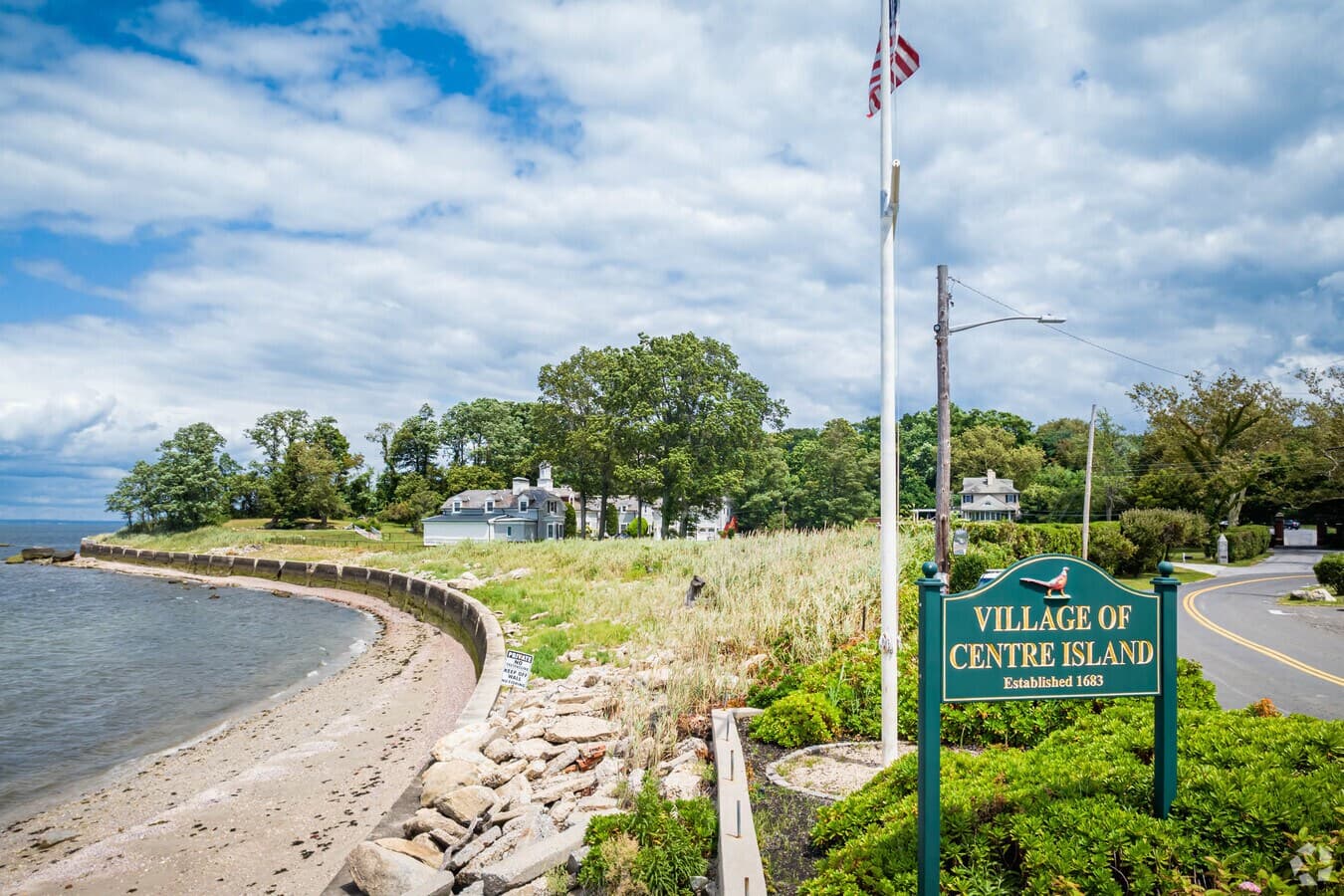
Drive onto the island today and the first thing you notice is what isn't there: no street signs, almost no traffic, few houses visible from the road. Large tracts of undeveloped land remain, home to Red Fox, Osprey, Eastern Screech Owl, Great Horned Owl, and Belted Kingfisher.
What the island has preserved — through four centuries of settlement, one revolution, two world wars, and a century of suburban development pressure — is something rare: a genuine sense of place. The light through the trees from the surrounding bay is the same light it has always been.
That is what this election is about.
“If you want to live in a place that feels like home, amongst people that feel like family, I would be honored to have your support.”
— Ragnar Oelsner