An Essay
The Principles of Preservation
On swans, stewardship, and why how we build matters as much as whether we build at all.
By Ragnar Oelsner · June 25, 2026
Charity is not charity if you are giving away other people's money. And preservation is not preservation if you are preserving other people's properties.
Natural landscapes are an incalculable asset to our community. The preservation of wildlife and rugged natural terrain lets complex ecosystems flourish. That sounds academic and esoteric - but it is viscerally experienced in the small touches of nature that draw us to Centre Island and make this place feel like home.
The birds chirping in spring. The gophers burrowing their holes. The rabbits nibbling at the grass. The foxes and the swans locked in their endless game of cat and mouse. Even when we dodge one too many deer on the road, there is a certain magic in seeing life's beating heart up close, in your own backyard.
.jpeg)
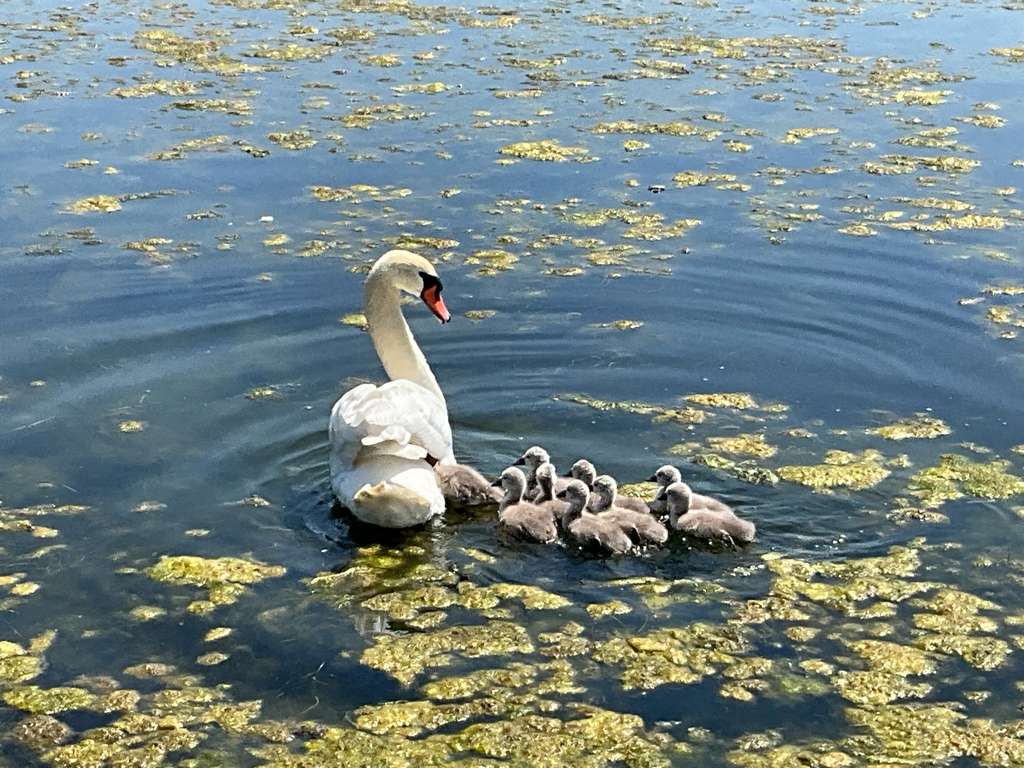
Since I was a kid, my family has had two swans call our ponds home. Each year they have babies - sometimes five, sometimes eight, sometimes only two. Swans are funny creatures, fiercely territorial. They will stand down a car on a gravel road, or fly at a flock of geese to clear the water for their young. A few decades ago, my family placed a small gazebo on an island in the center of our ponds - a sheltered nest, safe from the foxes and raccoons.
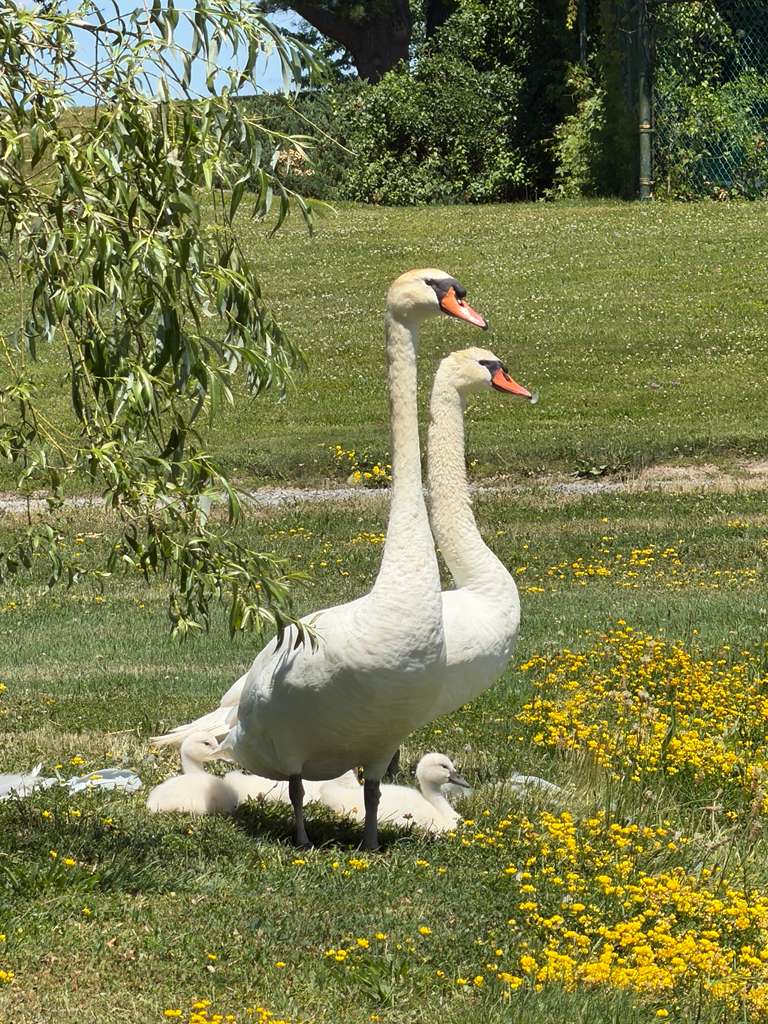
Those ponds were man-made in the early 1900s, and in making and protecting them my family created a freshwater ecosystem nestled within the broader saltwater wetland of the island. There is a notion nowadays that human activity is inherently adversarial to the natural world. In certain chemical and industrial capacities, that is certainly true. But man is also a shepherd of the natural world. His hand can beautify and enrich just as easily as it can destroy and extract.
.jpeg)
Fundamentally, that choice plays out in each of our hearts, and in each of our decisions. The choice to litter, or to pick up litter. The choice to build in excess, or to build in harmony.
There are many on the island with good intentions toward preservation. Sometimes good intentions aren't accompanied by a charitable spirit of persuasion, and are instead pursued by force of dictate. We all benefit from the preservation of our neighbor's property; it is easy to be charitable with other people's money, and a different thing entirely to place your own property where your principles are. Hunt Lawrence is an example of the importance of leading by example in any domain that asks for personal sacrifice.
When my great-grandfather first purchased Harbor Point, where my family still calls home, it was quarter-acre zoning and could legally have been built into more than a hundred homes. No individual on Centre Island has foregone more development rights than my great-grandfather. In 1940 he purchased Eastover to protect it from being subdivided and developed into a full scale marina. Over nearly thirty years of stewardship, my grandfather built two houses in total, each on three acres despite the quarter-acre history. He asked for two variances in the process - ironically, to allow homes smaller than the legal minimum of 2,000 square feet.
We design our environment, and then our environment designs us. What we build shapes how we live. If you build a mansion, you might get lost inside it before you ever experience what actually makes this place unique.
It's not my place to critique the aspirations or designs of any neighbor's plans for their hard-earned dream homes. Large houses have their purpose - for raising a big family, for hosting social functions, and sometimes as an artistic expression of a person's life - but they are also a lot to maintain. For a year or two, or ten, they may be fun; but you may find that over the long haul, a simple life by the bay, enjoyed outside, isn't just the preservationist's dream, but the pragmatist's as well.
.jpeg)
Sincerely, Ragnar Oelsner
Comments (0)
Be kind. Comments are public and moderated.